Request a Quote
Tell us what you need, and our team will get back to you within 24 hours.
I would not ask whether private label is “good.” I would ask whether your DTC brand has the repeat demand, fit discipline, and cash tolerance to survive MOQ, returns, compliance, and bulk production without kidding itself.
Sometimes, yes.
I would say private label fitness apparel is right for DTC brands only when the brand already has proof of demand, a tight product brief, and enough financial oxygen to survive sampling, revisions, freight, and returns, because private label does not fix weak positioning, sloppy fit, or paid-social addiction; it magnifies them.
Why pretend otherwise?
My read is simple: if your brand has one to three hero SKUs, repeat buyers, and a clear point of view on fit, fabric, and price, private label activewear can improve margin and control. If you are still guessing on audience, chasing trend scraps, or launching 24 SKUs to hide indecision, it is a bad bet.
The internet still sells.
According to the U.S. Census Bureau’s Q4 2024 e-commerce release, U.S. e-commerce sales reached $1.1926 trillion in 2024, up 8.1% from 2023, and accounted for 16.1% of total retail sales; in Q4 alone, not-adjusted e-commerce sales were $352.9 billion, or 17.9% of total retail. The demand pipe is real. The fantasy that demand automatically turns into profitable DTC apparel, though, is not.
But scale is not safety.
Reuters reported in September 2024 that Nike’s executives had already admitted their DTC strategy was not driving growth as expected and that the company was losing ground, especially in running; Reuters also reported in March 2024 that Lululemon warned of softer North American demand, with regional sales growth slowing to 9% from 29% a year earlier. That is the hard truth in plain English: even elite sportswear brands do not get a free pass just because they sell direct. Reuters on Nike’s DTC reset and Reuters on Lululemon’s slowdown should sober any founder who thinks distribution alone is strategy.
Returns eat brands.
MIT Sloan highlighted 2024 research using a large apparel dataset from a German women’s clothing retailer where online return rates ranged from 13% to 96%, averaging 56%, versus just 3% in-store. That is not a side note. For custom fitness apparel, where compression, opacity, recovery, and inseam tolerance matter, bad fit is not an inconvenience; it is a margin leak with a logo on it. MIT Sloan’s analysis of clothing returns makes the point better than most founders do.
So here is my position.
Private label fitness apparel is not a branding decision first. It is an operations decision wearing a branding costume, and brands that get that backwards usually discover the difference after they have already paid the deposit.
Fewer, better SKUs.
If I were judging readiness, I would look for a brand that can explain, in one page, why its leggings are 25-inch instead of 28-inch, why the bra pads are removable or not, what the gusset shape is, which logo method it wants, and what the care label must say. That is why the best internal-link targets on this site are the capability pages, not the generic category pages: private label activewear services, activewear customization options, strict quality control process, and the established supply chain page. Those pages carry the operational signals a serious buyer actually checks.
MOQ only helps when it matches demand reality.
On the site’s wholesale activewear MOQ and volume pricing page, the company says MOQ typically starts around 200 pieces and that orders of 5,000 to 10,000 pieces can receive a 10% discount, depending on style and order mix. I like that they say it plainly. But here is the catch: 200 pieces is a test number; 5,000 pieces is a forecasting number. Confuse those two, and your warehouse becomes your investor.
The site also gives useful, checkable details.
The homepage states 5–7 day sampling, 200,000 pieces of monthly output, a 2%–3% defect rate, two factories, and equipment from JACK and Yamato; the private-label page says the factory runs with 100 employees, 6 production lines, and up to 200,000 pieces per month; the About page says the company has operated since 2014 from Yichang, Hubei. Those are the right numbers to verify with a factory profile, QC records, and sample reports before you send money. They are not the kind of details content mills usually bother inventing.
I would still ask one uncomfortable question.
The About page describes a 5,000 m² production facility, while the private-label page describes 2 factories of 5,000 m² each. That may be a simple content lag. Or it may mean the site was updated by page, not by system. Either way, a skeptical buyer should ask for the current factory sheet, not guess.
Factories sell discipline.
The lean manufacturing page is more valuable than most product-category pages because it mentions 24-hour fabric pre-shrinking, precision cutting, embroidery and heat-transfer options, silicone/TPU logo application, industrial pressing, and inspection before packing. Combined with the QC page’s incoming, in-process, final, and random sampling checks, that gives a DTC brand a better clue about whether the supplier can repeat quality rather than merely sample it once.
That matters more than pretty mockups.
I have read too many supplier sites where the promise is “premium quality” and the evidence is a stock photo and a WhatsApp button. This site is not perfect, but its strongest pages at least point toward process, not just adjectives.
Stripes matter.
Reuters reported in May 2024 that Adidas lost its appeal against Thom Browne after alleging that four-bar and Grosgrain stripe patterns on shoes and high-end activewear infringed Adidas’s three-stripe trademark. Founders love saying “inspired by.” Courts love specifics. If your private label athletic apparel borrows too much visual DNA from an incumbent, you are not being clever; you are building discovery material for somebody else’s lawyers. Reuters on Adidas v. Thom Browne is the kind of reading more founders should do before approving trims.
And compliance is not optional.
The FTC says most textile and wool products must disclose fiber content, country of origin, and the identity of the manufacturer or marketer, and the Care Labeling Rule requires cleaning instructions; the Textile Products Identification Act also requires recordkeeping for fiber content for at least three years. So no, hang tags and woven labels are not “small stuff.” They are part of the legal architecture of the product. FTC apparel-labeling guidance and the Textile Products Identification Act are where the grown-up conversation starts.
Some pages are not ready yet.
When I checked category and product URLs such as workout-leggings archives and at least one product page, they resolved to a placeholder message, “Great things are on the horizon,” rather than full merchandising content. That means this article should not send valuable internal links into those URLs yet. I would keep links concentrated on capability pages, About pages, and any future blog assets that actually answer sourcing questions. That is the boring answer. It is also the right one.
Shelves still matter.
Nike’s 2024 retreat from pure DTC swagger and Lululemon’s softer North American signal tell the same story from different angles: direct channels are powerful, but they do not protect a brand from weak product flow, dull innovation, oversupply, or a tired message. If your whole thesis is “we’ll keep more margin because we cut out the middleman,” you may be right for one quarter and wrong for the next four.
This is my synthesis of the data on e-commerce growth, return risk, activewear demand softening, and trademark exposure. It is blunt because that is what bulk POs deserve.
| Brand condition | Verdict on private label fitness apparel | Why |
|---|---|---|
| 1–3 hero SKUs, repeat purchase behavior, clear fit feedback loop | Yes | Private label compounds margin, quality control, and brand consistency |
| Heavy Meta dependence, weak retention, 15+ unproven SKUs | No | Inventory risk and returns will outrun any margin gain |
| Strong creator, gym, or coaching audience with preorder discipline | Usually yes | Demand exists before the factory gets big commitments |
| “Dupe” positioning built around famous design cues | High risk | Trademark exposure is real, especially in sportswear |
| No technical brief, vague labeling plan, no QC tolerance sheet | Not yet | The factory will end up making decisions the brand should have made |
My rule is ugly but useful: if you cannot sell the sample twice at full price before approving bulk, you are probably not scaling a brand. You are financing a guess.
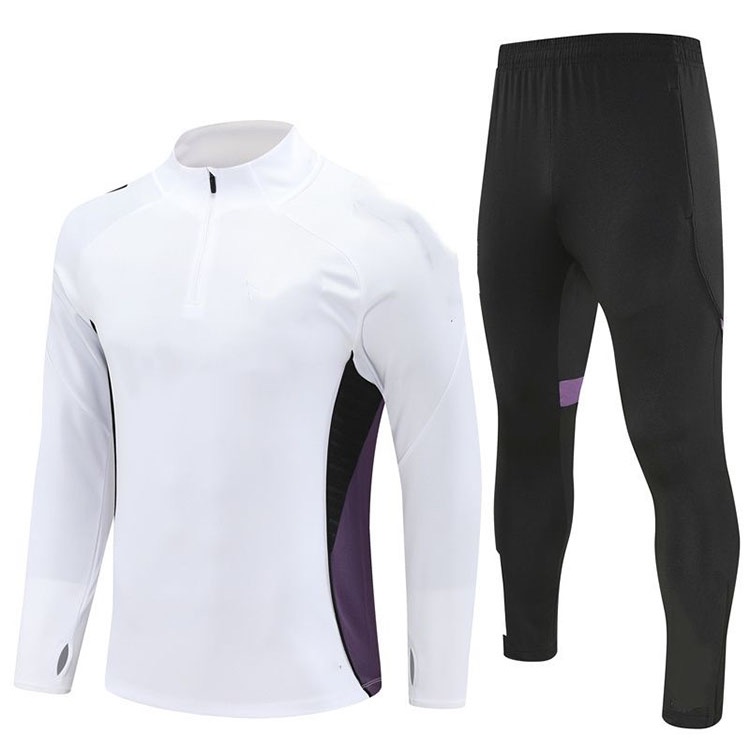
Private label fitness apparel is sportswear produced by a third-party factory and sold under your brand name, with your labels, packaging, fit specifications, and visual identity, while the manufacturer handles sourcing, sampling, production, and much of the execution behind the curtain for you. In the U.S., that still sits inside real labeling rules, not a branding free-for-all, because most textile products must disclose fiber content, country of origin, and the responsible marketer, along with care instructions.
MOQ in private label activewear is the minimum quantity a factory will accept for a style, fabric, or colorway, and it determines whether your first purchase behaves like a careful demand test, a cash-flow burden, or a very expensive lesson in forecasting. On this site, the stated baseline is around 200 pieces, with volume discounts mentioned for 5,000 to 10,000 pieces, which is reasonable only if your sell-through is already visible.
OEM fitness clothing is factory-made athletic apparel built to a buyer’s specifications, while private label usually adds your brand identity, packaging, and retail presentation, so the overlap is large but the commercial objective is different: OEM builds the unit, private label builds the branded line. The site’s private-label page makes that distinction clear by emphasizing logo work, packaging, production coordination, and end-to-end brand-ready execution.
Starting safely means defining one hero product, one customer profile, one fit standard, and one compliance-ready label system before you approve bulk, then pressure-testing the sample through wear, wash, measurement, and final inspection so operations, not optimism, make the decision. I would begin with one color family, one fabric platform, two sample rounds, a written QC sheet, and a final check that covers labeling, care instructions, branding placement, and return-sensitive fit points.
Be ruthless now.
If you want this page to convert qualified B2B readers instead of random browsers, keep the internal path tight: send readers from the article into private label activewear services, robust customization, strict quality control, solid supply chain, and, if sustainability is part of the offer, the recycled materials and packaging page. Those are the pages that answer buying objections. The placeholder category pages do not.
My final answer is this: private label fitness apparel is right for DTC brands that already know what they sell, to whom, at what margin, under what legal label set, and with what return tolerance. Everyone else should slow down before the factory speeds up.