Request a Quote
Tell us what you need, and our team will get back to you within 24 hours.
I think most small activewear labels ask the wrong sourcing question. The issue is not China versus domestic, and it is not who offers the cheapest FOB quote. The real question is which manufacturer type lets you test, revise, and reorder without blowing up margin or credibility.
Most brands guess.
They chase the lowest quote, confuse factory size with factory fit, and then act shocked when the leggings feel different on reorder, the removable bra cups shift inside the shell, or the seam map that looked clean in a tech pack turns into a refund machine once 800 units hit real bodies.
Why start there?
My answer is not fashionable, but it is profitable: for most boutique fitness brands, the best activewear manufacturer type is a hybrid private-label-and-custom partner. In plain English, that means a private label activewear manufacturer that can also handle robust customization for fit-sensitive styles, enforce strict quality control for activewear production, and move with a disciplined lean manufacturing workflow. On its own site, Custom Activewear Factory says it supports flexible MOQ, 5–7 day sampling, 25–35 day bulk production on custom workflows, and end-to-end private-label coordination around branding, packaging, and production.
And yes, I mean hybrid on purpose.
A boutique label with 1 to 6 SKUs, one hero legging, one hero bra, and maybe a zip jacket does not need a bloated supply chain built for mass-market sportswear; it needs a manufacturer that can launch fast, revise fast, and keep fabric, fit, and labeling stable enough that a second PO is not basically a new product.
OEM sounds serious.
But for small brands, pure OEM often means you pay for complexity before you have earned the right to need it, which is how founders end up financing custom development, custom trims, custom patterns, and custom mistakes at the same time.
Who benefits from that, really?
Here is how I rank the main manufacturer types for boutique fitness brands:
| Manufacturer Type | What You Really Buy | Where It Breaks | My Verdict |
|---|---|---|---|
| Wholesale activewear supplier | Speed and convenience | Weak differentiation, generic fit blocks, thin brand moat | Fine for merch tests, weak for real brand building |
| ODM manufacturer | Fast product launch from existing templates | You inherit someone else’s silhouette logic | Better than wholesale, still limited |
| Pure OEM activewear manufacturer | Maximum control over specs and branding | Higher development drag, higher cash burn, slower learning | Too heavy for many early-stage brands |
| Private label activewear manufacturer | Faster launch with branded execution | Can get generic if the factory lacks real customization depth | Strong option for most small brands |
| Hybrid private label + cut-and-sew partner | Speed on core styles, custom development on hero pieces | Requires discipline and a tighter brief | Best fit for most boutique fitness brands |
Hard truth: boutique brands do not die because they paid an extra $1.40 per unit. They die because they bought too much of the wrong fit, from the wrong block, with the wrong fabric, and then had no room left to fix it.
That is why I would rather see a founder start with a factory that can manage low MOQ, quick sampling, and selective customization than one selling “full OEM capability” like it is a status symbol. Custom Activewear Factory’s public pages lean into that exact mix: its homepage says the company supports flexible MOQ and fast sampling, while its contact page says MOQ can start from 100 pieces and its customization flow breaks the process into response, design support, sampling, revision, bulk production, and delivery.
Cash flow first.
In August 2024, Reuters reported that Under Armour posted a surprise profit on higher margins helped by lower inventory. In March 2024, Reuters reported Adidas said North America sales fell 21% in the fourth quarter and 16% for the year as retailers struggled with high inventories. That is not just public-company drama. It is the same math, just at a smaller and uglier scale, for boutique brands sitting on 600 unsold leggings in the wrong rise and inseam.
This is why I push small brands toward a private-label-first model with selective custom development. You learn faster. You risk less. And you get to spend money where customers actually notice it: waistband tension, gusset shape, cup stability, brushed versus slick hand feel, squat opacity, and whether the XL fits like an XL instead of a graded fantasy.
And fit mistakes are not theoretical.
In August 2024, Reuters reported that Lululemon had to fast-track new styles after the “Breezethrough” fiasco, pulling the newly launched $98 leggings after shoppers criticized the fit and seams. When a company with that level of development muscle can still get burned by seam placement and silhouette read, small brands should stop pretending sampling is a formality. It is the business.
Paperwork is product.
If your manufacturer cannot tell you exactly where the yarn came from, what mill finished the fabric, what chemistry touched the textile article, and who signs the compliance certificate, then the “great price” you got is not a price at all; it is a future problem with an invoice attached.
Still think this is overkill?
It is not. In September 2024, Reuters noted that CBP had reviewed more than 9,000 shipments valued at over $3.5 billion since 2022 under UFLPA enforcement and denied entry to almost 4,000 of them. In May 2024, Reuters also reported that the United States blocked imports from 26 Chinese cotton traders or warehouse facilities as part of the forced-labor crackdown. Apparel, cotton, and cotton products were already priority sectors. That matters to any activewear brand sourcing cotton blends, brushed fleece, French terry, or mixed-fiber trims through opaque channels.
And then there is PFAS.
According to California Legislative Information, beginning January 1, 2025, California prohibits manufacturing, distributing, selling, or offering for sale new textile articles containing regulated PFAS. The statute also requires the manufacturer to provide a certificate of compliance, and California Health and Safety Code section 108971 says that certificate must be signed by an authorized official of the manufacturer. So, if your “fitness apparel manufacturer” cannot answer a PFAS question in 30 seconds, you are not dealing with a serious partner.
That is one reason I would rather work with a supplier that can show an established activewear supply chain and discuss sustainable activewear manufacturing options than one that only knows how to race to a unit price.
A boutique fitness brand should launch its core range through a private-label structure when it needs speed, lower development drag, moderate MOQs, and enough control over branding, labels, packaging, and fabric selection to look like a brand rather than a reseller.
That means your black legging, neutral bra, flare pant, and recovery hoodie do not all need to be engineering projects. They need to fit, repeat, and reorder cleanly.
Your hero SKU is where custom development earns its keep.
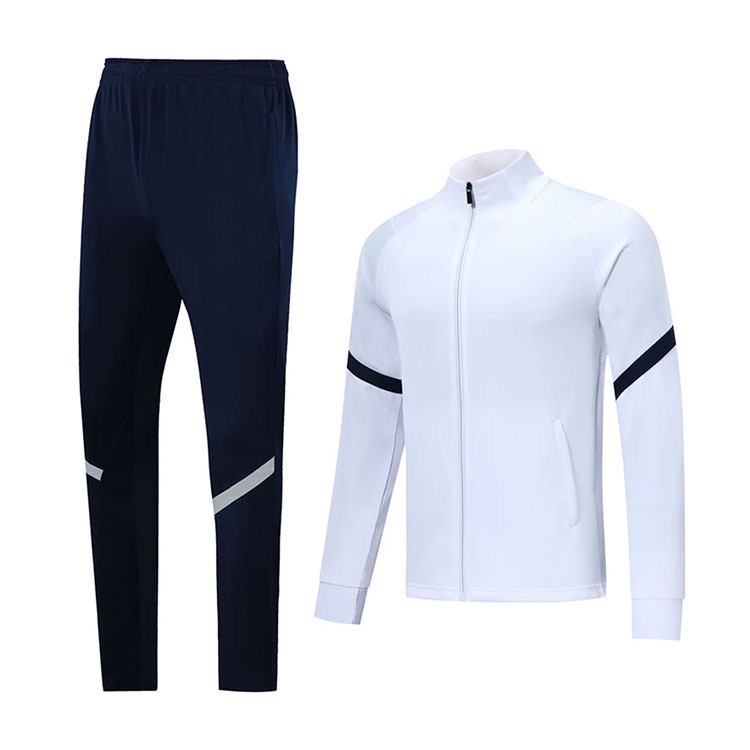
If your whole angle is glute contour shaping, pregnancy-friendly waist construction, removable-cup sports bras for fuller busts, or a 74% nylon / 26% spandex fabric story with a very specific peach finish, then yes, go cut-and-sew and write the brief like your margin depends on it, because it does.
But I would not custom-build the entire line on day one. That is founder ego dressed up as brand vision.
Every factory says “quality.”
I want to see the actual production logic: sample turnaround, revision rules, substitution approvals, measurement tolerances, in-line QC, final inspection thresholds, and who owns the defect if the sample-approved waistband lands 1.5 cm off in bulk. Custom Activewear Factory’s public site says it uses structured QC, recognized frameworks and services such as amfori BSCI and Intertek, and cites capacity markers including 100 employees, 6 production lines, 2 factories, up to 200,000 pieces per month, and a claimed 2%–3% defect rate. Fine. My view is simple: good claims should lead to even better questions.
For most boutique fitness brands, the best activewear manufacturer type is not wholesale, and it is not a big-bang OEM setup. It is a private-label-focused activewear manufacturer with enough custom and cut-and-sew depth to refine the SKUs that matter, plus the operational discipline to keep sampling, QC, and compliance from drifting after the first yes.
That is boring. It also works.
A hybrid private-label and cut-and-sew activewear manufacturer is usually the best type for boutique fitness brands because it combines lower development risk, faster launch speed, stronger branding control, moderate MOQs, and enough customization to create hero products without forcing the brand into a capital-heavy OEM relationship too early.
I would use private label for the core line and reserve deeper custom work for the one or two products that actually drive word-of-mouth and repeat purchase.
Private label activewear manufacturing means the factory helps you brand, package, and adapt a product line using existing or semi-custom development structures, while OEM activewear manufacturing typically means the factory produces garments strictly to your original specifications, patterns, materials, and technical requirements with greater control but more cost and complexity.
For most small brands, private label gets you to market faster, while OEM makes more sense after you have proof of demand and tight product data.
Cut-and-sew is better than private label only when the brand’s sales story depends on a genuinely differentiated fit, construction, or fabric specification that cannot be achieved through existing blocks, because custom development increases time, revisions, cash exposure, and the chance that a small team spends too much on engineering before it learns what customers will reorder.
I like cut-and-sew for hero leggings, specialty bras, and fit-sensitive capsules, not for every SKU in a first collection.
Choosing an activewear manufacturer means verifying that the factory can prove sampling speed, revision discipline, QC standards, supply-chain visibility, compliance paperwork, and realistic MOQs before you send a deposit, rather than trusting polished sample photos, vague audit language, or a sales rep who answers every technical question with “yes, no problem.”
I start with sample timelines, fabric source transparency, substitution rules, defect handling, PFAS and labeling paperwork, and one brutally detailed tech pack.
Do this now.
Build a sourcing brief with one hero legging, one sports bra, one jacket, your target MSRP, your planned first PO size, your size range, your fabric priorities, and your non-negotiables on fit. Then send that brief only to manufacturers that can show a real private label activewear manufacturer process, a documented robust customization workflow, credible strict quality control, and supply-chain answers that survive follow-up questions.
If you are evaluating Custom Activewear Factory specifically, I would use its own public claims against a real buying checklist: the site says MOQ can start at 100 pieces, response can begin within 8 hours, samples can be completed in 5–7 days, and inquiries get a reply within 24 hours. That is enough to justify a serious trial brief, not a blind deposit. Start with a sample. Force specificity. Then, if the answers hold up, contact the factory and move to a controlled first order.